The Rev. Jimmy Abbott
Trinity Sunday
June 4, 2023
Genesis 1:1-2:4a
“In the beginning when God created the heavens and the earth…” It’s such a majestic opening, almost breathtaking in its scale. It’s unfortunate, I think, that this long description of creation that we just heard has become such a lightning rod; especially in the last one hundred years at the hands of modern Christianity. On the one hand, some read this as a scientific textbook. A clear description, given to us by God, of exactly when and how the heavens and the earth were made. Finding that a bit too parochial, others dismiss this creation story as a myth, at best, or a lie, at worst.
What strikes me is that we’re missing the sheer beauty of the story. The sense of wonder that the ancient Hebrews were trying to express. I think that those who read this as either a scientific text and for those who read it as a myth all miss the point. It’s a poem. Poems are not meant to be cut up and dissected, they’re not meant to express technicalities. They’re meant to evoke feeling, wonder, curiosity. Marilynne Robinson, the American essayist put it best. She wrote, “The Bible today is much thumped but little pondered.” Nowhere is this more true, perhaps, than in the seven days of creation. So today, I ask us to ponder a bit.
On the first day, God separates light from dark, night from day. Easy enough, right? It says it, right there, in plain speech. The scientist may say it doesn’t match up with the scientific record. The stickler might say that we have to believe it. But for me, for us, for the poets among us, we might ponder for a moment. And ask, “what’s dusk?” Is it night or day? And what about the golden fingers of sunlight, or the gloaming? Even that great Old English word, “twilight,” means something like half-light, or between light. Once we stop thumping the Bible or sneering at it, and start pondering it, we can begin to appreciate the wonder of it all.
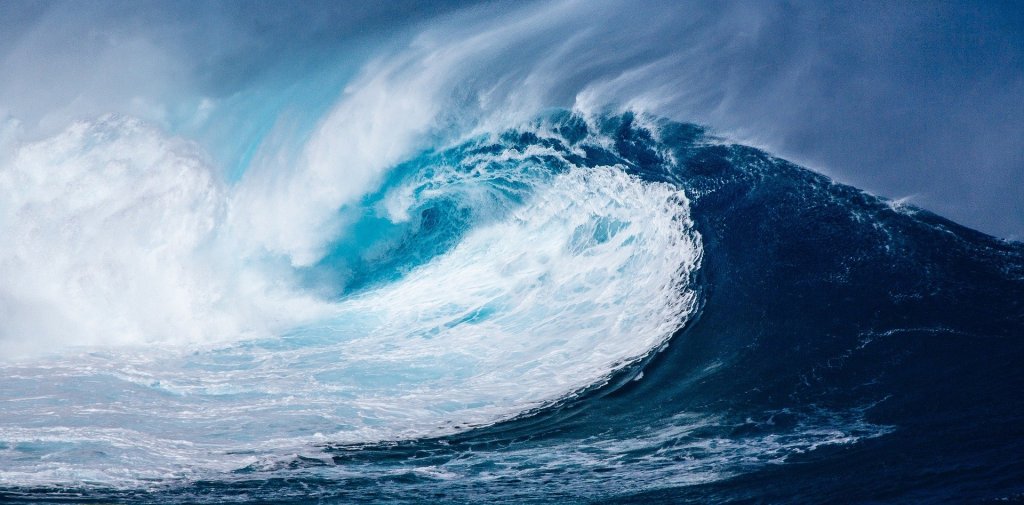
Or take the third day of creation. God separates the waters from the dry land. And God brings forth vegetation on the earth, the dry land. It seems so cut and dried. But then, what’s a swamp? Is a bog dry land or water? You could go out to the beach now and stand in the water and say, “this is water.” But in a few hours, the tide will go out and that very spot will be dry land. I know that, because I checked the tide charts for today. Just our lived experienced on this good earth shows that things are much more complex if we take just a moment to wonder.
And going one step more, I don’t even think this story of the seven days of creation is meant to describe the world. That’s the category error we make. This story, this poem, is about God. Again, read it as a poem. And the poem has that refrain, “And God saw that it was good.” And God saw that it was good. God is the subject of that sentence. This is poem about God, this is about the God who called all this into being and then blessed it. This is about God who is good and who desires good. We’ve got to stop investigating the Bible, arguing about it, analyzing it, and start enjoying the wonder of it again.
The same goes for much of our Christian faith. I’ve talked about this before. Today we’re celebrating a baptism. Myles will become a full-fledged member of the Church. Through this water, his sins will be washed away and he will be made clean. Through the power of the Holy Spirit, Myles will be welcomed into the household of faith. This is something to marvel at. This gift, this sacrament, this ceremony is a gift from God. But how does baptism work? Even ancient theologians argued about this – some said we should baptize with three splashes of water because God is Trinity, others said we should only have one splash of water because God is One. We need to relax. Let it breathe. Maybe we should just wonder that God is calling Myles as his own child. Baptism is about God.
And today is Trinity Sunday. Today in the church we especially recognize that there is one God in three persons. How does that work? How can I force that goofy math into a formula? I don’t know. And I think that’s okay. Maybe instead we ought to pause and wonder at the sheer majesty of this God that is beyond our comprehension. In other words, I love the Bible too much to thump it.
And if you’ve noticed, when it comes to our culture wars of the present moment, it’s always about the ambiguity; it’s always about the edges between one clear thing and the other. We’re always arguing about the things that just don’t quite fit neatly into one box or the other. We do this with people, all the time. We want everything to be dark or light, water or dry land. All I want to say about that is what I’ve already said. Perhaps instead of trying to jam things into categories, one or the other, we can take the time to ponder, to think, to wonder at the diversity of creation. And you know that my job is not to tell how you to think; no, my job is to provide the theological tools to help us think.
I promise, I’m not being wishy-washy. Sometimes, I think it’s okay to not know. There’s a great old story like this from ancient Christianity. During one of the great controversies of the early church about the doctrine Holy Trinity, they were trying to decide if we should say, “Glory to the Father, and to the Son, and to the Holy Spirit,” meaning that all three are equal. Or, should we say, “Glory to the Father, with the Son, through the Holy Spirit,” meaning that God the Father is receiving the glory directly. I know, we don’t care now, but they cared. Anyway, a big crowd shows up to church one day to hear what their priest is going to say, which side is he going to come down on. You know what that priest does, you know what he says? “Glory to the Father…mumble mumble mumble.” He mumbles. He doesn’t choose a side. So at least I come by it honestly. (See Maxwell Johnson, “Praying and Believe in Early Christianity.”)
I do hope this story, too, puts our modern consternations in perspective. What we care so desperately about now, may not amount to much for our descendants. And what’s more, this grand poem about God creating the heavens and the earth is a big piece of humble pie. God is the subject of every sentence, and we are but followers; followers of this One God revealed in Jesus.
And finally, you all should know, that I do not write my sermons on Saturday night. That is a promise that I made to myself – that I would give you the best of my writing, not the afterthought. But I felt compelled to change my conclusion after I saw that beautiful, blood red full moon last night. Did you see that? In that purple darkness between night and day, the Sun’s rays refracted through the Earth’s atmosphere, hit the Moon, and bounced back to us in that shocking red. We received that beauty only because of that beautiful time that doesn’t fit between night and day. I drove down the Seawall to see people splashing in the surf; that only happens because the beautiful ambiguity between dry land and water.
Does our Christian faith fit into perfect categories? Of course not. Because this is the God who is One in Three and Three in One. Is baptism easy to wrap our minds around? No. It is more beautiful than that. So rather than trying to get it all right, I pray that we would simply marvel at it. And I pray that God would forbid us from being so presumptuous as to think that we know what God knows. Instead, I pray that we would have the spirit to ponder anew at this God who is One in Three and Three in One.
 The Rev. Jimmy Abbott
Leave a comment