Feast of the Transfiguration
Sunday, August 6, 2023
Luke 9:28-36
The entire video of this service can be found on the Trinity Episcopal Church YouTube channel. The audio of the sermon can be found here.
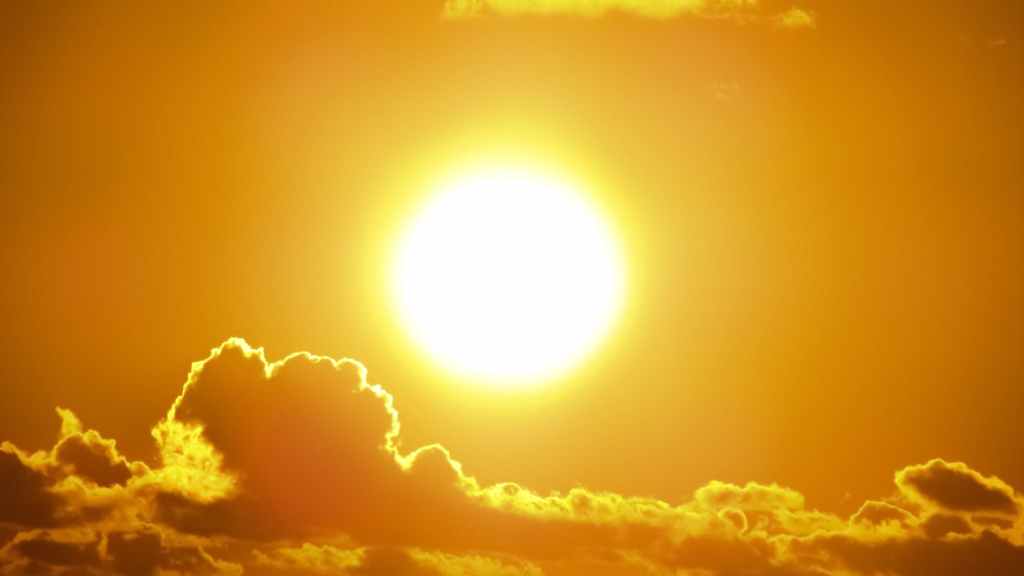
He was a simple man, and though it cost him much, though his neighbors scoffed at him, he had decided to follow Jesus. Drawn to the message of love, service, compassion, he had dropped his old way of life and started this new one. Following Jesus had not been easy, but on that day, everything changed. He stood up on a great hill and suddenly, there was a sheet of sun, so brilliant that he hid his eyes, he cowered in absolute fear. He could not comprehend what all was taking place. The scene before his eyes was more than he could understand. For it was August 6, 1945. It was Hiroshima, Japan. And that man was the Rev. Tanimoto, a Japanese Methodist pastor. Following Jesus in wartime Japan was not easy. He was ostracized, mocked, bullied. Yet Rev. Tanimoto labored hard for his little congregation. And on that morning, August 6, 1945, he just happened to be on a hill outside the city when the American bomber released its terrible weapon. He saw the dazzling light of the first atomic bomb dropped in war. And when Rev. Tanimoto saw the flash, he dove behind a great rock, desperate for safety and security.1
I’ve always found it haunting that the Feast of the Transfiguration, August 6, just happens to be the day that the first atomic weapon was used in warfare. A brilliant light. A thunderous boom. People cowering in fear. It’s all a bit surreal. And while there was so much death, on that other mountain, transfigured in dazzling array, Jesus speaks of his “departure” with Moses and Elijah. This is no random euphemism. Jesus is talking about his upcoming execution. The disciples blanche at the thought. Peter cries out, “Master, it is good for us to be here; let us make three dwellings, one for you, one for Moses, and one for Elijah” (Luke 9:33b). Scared out of their senses by the vision before them, they dive behind the proverbial rock, seeking safety and security.
But more than that, they want to capture the glory of that moment and bask in it. There’s Moses, Elijah, Jesus, right in front of them; they think they have it all. This is the lie of safety, to think we have it all and to capture it. To build dwellings, to stay on top of the mountain, to contain the glory of the good moments of life. The “departure” is too frightening to comprehend. From our vantage point on the mountain, with Peter and James and John, with Rev. Tanimoto, we look out and see a sick and dying world. Refugees in every hemisphere. Wildfires. Hurricanes. Violence in churches, schools, homes. And so we build shelters for ourselves. We hunker down, erect higher walls, install better security systems in our homes, we get more protection. I know you do this, because I do it. From our vantage points, the scene is all too frightening, and so we dive behind the rocks, seeking safety and security. We want to stay, up there, away from it all.
Mountains mean something in the Bible. And, this story of the Transfiguration, on that mountain, calls to mind another one, Mount Sinai. Yes, Mount Sinai is where Moses received the ten commandments from God as the Israelites were leaving slavery in Egypt. But there’s something else going on. Mount Sinai is also a sign of liberation. When Moses went to Pharaoh, demanding that Pharaoh release the Hebrew slaves, it was so the Hebrews could go into the wilderness and worship God on Mount Sinai (Exodus 7:16, 8:1, 9:13, 19, etc.). The mountain is not just a convenient place to meet God in the sky. The mountain is not simply a place to gather the commandments from God. The mountain top experience is not simply spiritual enlightenment or escape from the world. No, that mountain was a sign that God will liberate the people from slavery in Egypt.2 This mountain with Jesus is a sign that God is up to it again.
Liberation. Liberation from accumulation. Liberation from the cowardice and greed that drives us inward. Liberation from that all-too tempting voice to build our dwellings and hide ourselves from the pain of the world.
Because in truth, there is no hiding. Of all the lessons about God we take from the story of Jesus’ transfiguration on the mountain, this is the most haunting. There is no hiding from God. All throughout the gospel stories, Jesus is trying to get his disciples to listen to what he says. And the disciples, hard-headed as they are, don’t pay attention. There are too many distractions.3 They don’t get it. But here, on the mountain of transfiguration, enveloped by the glorious cloud from God, there is no option. The disciples must listen. They cannot hide.
Indeed, we cannot hide. No place in this world is free of problems. In our wealth, in our power, we think that our lives ought to be free of problems. Or, at least unencumbered by the suffering of others. But what both the transfiguration and the atomic bomb teach us is that there is nowhere to hide. Atomic fallout does not stop at borders. Environmental or societal catastrophe in one country creates migrants to another. A war in Europe, a famine in Africa, a cartel in Mexico – they all impact us, even here on this little island in the sun.
There is no hiding. This is the God who sees all and knows all. There is no escape from the piercing light of God’s mighty presence. When Adam and Eve thought they could hide in the Garden of Eden, this is the God who came looking for them and found them (Genesis 3:8-10). This is the God whose seraphim have eyes all around (Ezekiel 1:18). This is the God whose sword will pierce our own souls, too (Luke 2:35). This is the God who created all, that is seen and unseen.4 There is no hiding, either from this God or from the world that heaves and burns with sin and devastation. Not even the mountaintop can protect us.
So on that August morning, in 1945, after the shock wave had passed, the Rev. Tanimoto climbed out from behind that rock, from where he hid from the atomic blast, and went down the mountain and into Hiroshima; into the cauldron in which eighty thousand souls had just been vaporized. Mostly, the Rev. Tanimoto was thinking of his wife and infant daughter who were still down there, in the smoldering city. The descriptions of what he saw there are too horrifying to repeat. Somehow, by the grace of God, he found his wife and daughter unharmed.
But the story goes on. That blinding light, that flash, became the defining moment in his infant daughter’s life. For that daughter, Koko Kondo, would eventually grow up and become one of the world’s leading peace activists.5 The Rev. Tanimoto descended that mountain and, in a way, it became a mountain of liberation for others. That flash, that moment, defined his daughter’s life, and she now works so that no one else would have to live the trauma they lived through. August 6, Transfiguration Day.
Now, I do not mean to make a value judgment on the American decision to use the atomic bomb at Hiroshima, and three days later at Nagasaki. And, believe it not, this sermon is not ripped from the Oppenheimer headlines. I have no interest in that. Nor am I thinking of the names of the dead on the World War II roll of honor just over there, and how many more names might have been added to it had the war continued. Nor I do not mean to say that the Japanese empire was not worth defeating, for the atrocities they committed are also too much to hear. The suffering, the shame, and the dying afflicts everyone one of us, whatever side of a war we happen to be on.
What I’m saying is that more often than not, it’s people like Tanimoto and his family who suffer the consequences of these decisions. But it’s the people like Tanimoto and his family who can teach us what it means to overcome our fears and to go down the mountain. Staying on the mountain is actually not protection, it’s bondage to our fears. It’s only by going down the mountain that we are liberated. Liberated from the belief that we can save ourselves and not others (Luke 23:37). Liberated from our isolation of the indescribable horrors of the twenty-first century. For, though we dread it, though we hope it never comes, the specter of that blinding light lurks behind the world’s course of events.
And of course, there is that one last mountain, one more liberation yet to be accomplished. Jesus will climb one more hill outside of Jerusalem and will stretch wide his arms open the cross. And from there he will see the whole rotten system laid out before him, he’ll see the bombed out cities, he’ll see the veteran who can barely sleep through the night, he’ll see the cruelty of this world, he’ll see me and you, and he will die for it. Because this world, this hot mess in which we live and move and have our being, it is the world that God loves. In that moment, when Jesus’ sight is flashing with pain unimaginable, God liberates us from sin and death. And if we are freed from that, if we believe that we are truly free, then the only thing holding us back from facing this world on fire is our own unbelief. I am tired, tired of thinking that we can hide from it all. Consider this your liberation, you are free to crawl out from behind your rock, you are you free to go down the mountain. We are liberated to listen to him, to God’s Son, the Chosen.
- Hersey, John. “Hiroshima.” The New Yorker, August 23, 1946. https://www.newyorker.com/magazine/1946/08/31/hiroshima.
↩︎ - Ringe, Sharon H. “Luke 9:28-36: The Beginning of an Exodus.” Semeia 28 (January 1, 1983): 83–99.
↩︎ - Miller, David Marvin. “Seeing the Glory, Hearing the Son: The Function of the Wilderness Theophany Narratives in Luke 9:28-36.” The Catholic Biblical Quarterly 72, no. 3 (January 1, 2010): 498–517.
↩︎ - Book of Common Prayer, 358. ↩︎
- “The U.S. Hid Hiroshima’s Human Suffering. Then John Hersey Went to Japan – Document – Gale General OneFile.” Accessed June 17, 2023. https://go.gale.com/ps/retrieve.do?tabID=T004&resultListType=RESULT_LIST&searchResultsType=SingleTab&retrievalId=5329f113-e8df-4ddd-be2d-c6dddd42996b&hitCount=1&searchType=AdvancedSearchForm¤tPosition=1&docId=GALE%7CA632075272&docType=Article&sort=RELEVANCE&contentSegment=ZGPN&prodId=ITOF&pageNum=1&contentSet=GALE%7CA632075272&searchId=R1&userGroupName=tel_a_uots&inPS=true.
↩︎

 The Rev. Jimmy Abbott
Leave a comment