Twenty-first Sunday after Pentecost
October 22, 2023
Matthew 22:15-22
The full audio of this sermon is available on the podcast page. The full video of the service is found on the Trinity Episcopal Church YouTube channel.
In my years of leading churches, I have learned one lesson, over and over again. No matter what I do, no matter what decision I have to make, I am going to disappoint someone. You just can’t make everyone happy. Before being here at Trinity, as you know, I led a congregation up in north Houston, and we designed a built a church while I was there. Even though it was exhilarating, everyone was disappointed. We disagreed on how many parking spaces we need, how many windows we should have, how big the bathrooms should be. Some folks were even disappointed at how shallow the sinks were. I thought they were fine, looked like a sink to me. So I just had to settle with myself – everyone was going to be disappointed.
You’ve been caught here before, haven’t you? Because of a situation, because of some ambiguity, because of the personalities involved, no matter what you say or do, you’re going to cause a problem. Welcome to humanity. One of the most important leadership lessons I learned was this – leadership is being comfortable with someone else’s discomfort.
And Jesus gets that. Jesus first understands our capacity for pettiness, our proclivity to take sides, to get our feelings hurt over the smallest issues. And Jesus knows what it means to be trapped, to be caught between the rock and a hard place, knowing that no matter what he does, he’s going to disappoint someone, or in this case, everyone.
One more thing – the geopolitics of the ancient Middle East were nearly as complicated as they are now. Jerusalem and the Jews are ruled by the Roman Empire. One side of extremists collaborated with the Roman Empire, including the Herodians. One side of extremists were revolutionaries, insurgents, fighting the Roman Empire. Jesus walks right into the middle of the them.
Jesus is teaching in the Temple when some Herodians approach him. Trying to trap Jesus, they ask, “is it lawful to pay taxes to the Emperor or not?”
If Jesus says it’s not lawful to pay the tax, then the Herodians will accuse Jesus of rebellion against the Roman Empire. And from there, they can get him cricified. If Jesus says it is lawful to pay the tax, then everyone else will say that Jesus is collaborating with the Romans. And from there, they can kill him. Whatever Jesus is going to do here, he’s going to disappoint someone. And either way, someone will be out to accuse, arrest, and execute Jesus.
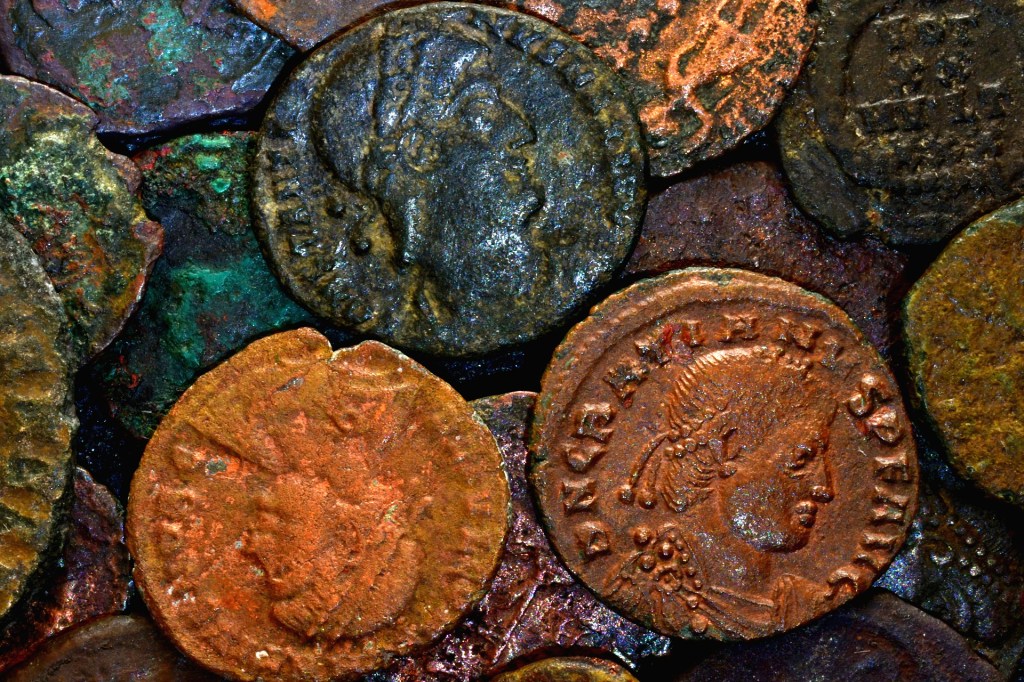
The genius in Jesus’ response, I think, is that he goes ahead and disappoints everyone. Which is actually not a bad strategy for leadership. Jesus says, “show me the coin you use to pay the tax.” The trick to this, is that the coin used to pay the Roman tax was a Roman coin. And that Roman coin had the Emperor’s image on it. Like our coins that say, “In God we trust,” their coins would have said something like, “the emperor is a god.” According to Jewish religious law of the time, this is idolatry. So right off the bat, Jesus is sticking it to the Herodians. The Herodians have proved themselves to be open collaborators with the hated Roman Empire, simply because they have the coin at hand.
But not so fast. It’s not like everyone else gets off so easy. “Give to the Emperor the things that are the Emperor’s.” Jesus is also saying that it’s okay to pay the tax. The coin has the emperor’s image on it, it’s his anyway, send it right back to him. Now he’s sticking to the revolutionaries who said it was wrong to pay the tax.x
And then comes the zinger. “Give to God the things that are God’s.” So we have to ask ourselves, “what are the things of God?” Uh-oh.
Because, everything belongs to God. All that we have and all that we are, was created by the Lord God Almighty. It’s actually a pretty simple thing to return to the emperor the things that are the emperor’s. It’s just a coin. But the things that are God’s? Our hearts, our treasures, our minds?
Sure, Jesus disappoints the bickering political parties of the day, but he does more than that. Jesus is calling for an open revolution, a revolution of the human heart. This is what belongs to God. And Jesus calls us to return that thing we treasure most – ourselves – back to God.
It’s disappointing, I know. Because there are parts of ourselves that we want to keep for ourselves. We don’t want God to touch some corners of our hearts – we would rather wallow in our misery, marinate in our self-imposed suffering. Disappointment is such an easy default for us humans, and it’s so tempting to stay there. We love to replay all the ways that people have disappointed us, we enjoy hanging on to those memories of people who have wronged us, we treasure all those bad vibes. And what does this do? When all you do is think about how everyone else is wrong, you are putting yourself at the center of your life. This is the height of ego. This is idolatry. The Christian word for it, is sin.
When Jesus says to give back to God the things that are God’s, it is supposed to be medicine for our souls. It’s a revolution that will put you back onto the path of healing and grace. We can go on fighting, we can go on harboring animosities, we can count up all the ways that other people have disappointed us. We can store those in our emotional savings accounts. And at today’s interest rates, those emotions will only grow. And the only thing that we will get in return is more disappointment. Give back to God the things that are God’s. This is the way out of our funk, by offering to God all our hurts, loves, pains, and memories.
And one thing more. I think that all too often, our prayers, what we are returning to God, are too wimpy. We think that God is nice, so we shouldn’t share with God all the not so nice things in our hearts and our brains. We don’t want to disappoint God so we sanitize what we say to God. “Oh God, thank you for my health, my family, and my house. Oh God, help me be a better person.” Nah, I say let it rip. When you’re mad, tell God you’re mad. When you’re devastated, tell God you’re devastated. When you just want to burn it all down, tell that to God. When you need to sit down and bawl like a baby, sit down and cry it out with God. “Oh God, I am stark, raving mad at what’s going on in the world. My soul is crushed when I see people running through bombed out streets. Oh God I am horrified, terrified, at what I see on the nightly news. Oh God I am so lonely, so lonely even though I am surrounded by people.” God is big enough to take the whole spectrum of human emotions. Because, after all, God created us this way. Those emotions you have, all those feelings, they belong to God. Give back to God the things that are God’s.
This is an open call for revolution, and Jesus is disappointing those of us who like things the way they are in our hearts, even if things aren’t right. In order to be saved, in order to be healed, we cannot hang on to our own stuff. We have to give it back. And when Jesus stretches wide his arms upon the cross, he takes it all. And he holds it for us. And when he dies, even if it looks like a disappointment, it is actually our victory. Because those pains, those anxieties, those memories can die with Jesus. Our pettiness and the cultivation of our egos can stay in the tomb. And then we are raised again with him to new life. To a better life. To a life with Jesus. Give to God the things that are God’s, and you will get more than you could ever hope for in return. You will get your life back, your heart back. You will know Jesus.
Bibliography
Wright, N. T. Christian Origins and the Question of God. 2: Jesus and the Victory of God. Minneapolis: Fortress Press, 20.
Hauerwas, Stanley. Matthew. Paperback edition published 2015. Brazos Theological Commentary on the Bible. Grand Rapids, Mich: Brazos Press, 2015.




 The Rev. Jimmy Abbott
Leave a comment