Second Sunday in Lent
March 16, 2025
Luke 13:31-35
On Christmas Day 1838, the Rev. Caleb Ives held the first ever worship service of the Episcopal Church in Texas. In Matagorda of all places. Why Matagorda? Because it was a port town. There were people there. And if you’re going to start a church, your best bet is to go where the people are. To a city. Right after that, Christ Church, Houston was started. Why Houston? Because that’s where the people were. Right there, downtown, near the rail station, not far from Allen’s landing. If you are going to start a church, go to the people. Of course, we came in third place. Why Galveston in 1841? Because that’s where the people were.
And we can track this over the course of time in Texas. First we started churches at the ports, because that’s where the people were. Then we started churches along the railroads, then in small towns, then in the suburbs, the along the highways – because that’s where the people were.
See, Christianity is an urban religion. Why? Because that’s where the people are. It’s always been that way.
Think of it, the Bible is a record of humans and their cities. Because that’s where the people are. We just read how the Lord calls Abram out of Ur of the Chaldeans. That’s a city. And the Lord sends Abram to a different territory; a place where they can build some cities.
We heard it also in the New Testament lesson. Saint Paul is writing to the church in Philippi, that’s an ancient Roman city.
The same with Jesus. Sure, he started out in rural Galilee, but notice, all throughout his ministry, he goes to where the people are. In the Gospel of Luke, he goes from town to town preaching and healing and teaching. Why? Because that’s where the people are. And then, like we just heard, Jesus laments over the city of Jerusalem. “Jerusalem, Jerusalem, the city that kills the prophets and stones those who are sent to it!” (Luke 13:3X).
Even at the end – the final vision of the Bible in the book of Revelation – is of a city, the new Jerusalem coming down out of heaven. In the Bible, heaven is not a big country with rolling hills and puffy clouds. No, heaven is a city, with streets and buildings and commotion, and people.
This is the blessing and the curse of cities. They are full of people, full of opportunity. If you want to start a business, if you want to start a social movement, if you want to start a church, you go to the city. That’s where the wealth is, that’s where the power is, that’s where there’s opportunity. But the problem is, cities are where people are. And you’ve met people. With opportunities come greed. Power fosters corruption. Diversity can create distrust.
That’s what happens to Jesus, after all. And it’s what happened to the prophets before him. They go to Jerusalem, because that’s where the people are, because they want to make an impact. They want to bear the message of the Lord God to God’s people. Time and time again, though, they had killed those prophets.
So, Jesus laments over the city. Jesus says he wants to gather the people of Jerusalem together, like a hen gathers its brood under her wings, but they are not willing. And soon, they will kill Jesus. Why? Because, they’re people. All living together in one city. And cities always teeter on that knife’s edge. Between opportunity and failure. Between wealth and poverty. Between diversity and segregation. Between power and abuse of power. Between blessings and curses. The history of humanity and God’s relationship with God’s people, is in the city.
I promise I’m going somewhere with this. Because this is a trend in the United States that we need to pay attention to. Cities are growing. At the time when Caleb Ives first held that worship service and when Trinity Church was founded, 10% of Americans lived in urban areas. 90% were rural. Today, 80% of Americans live in urban areas, 20% are rural. By 2050, we can expect 90% of Americans to live in urban areas. You can try to run away from the city, but the city is coming to you. We all know the allure of going out to the country, of escaping it all, of getting a piece of land for some peace and quiet. Of retiring out there, away from the people. But that’s not where the Church is going to thrive. The Church thrives in the city, because that’s where the people are.
And as Jesus looks over his city, Jerusalem, he calls out to them like a mother hen. And so, here the Church has our purpose. To be like a mother hen, gathering her brood under her wings.
Like a mother hen. What an astounding way to think about God and about the Church. In all the ups and downs of your life, when you’re worried or scared or hurt or traumatized or confused – there is the Lord God and the Church. As a mother hen. Gathering you under her wings. Yes, we might think of the Lord God Almighty as the Father. But here Jesus makes us think of the Lord God Almighty as the mother hen; holding us, embracing us, protecting us, caring for us. Though we often fall short of deserving it.
And the Church, too. Though we often fall short of doing it. Our call, our purpose in this world, is to gather all people under our wings, into our house, and care for them. We are to be the mother hen. And we cannot run away from it. The world is becoming more and more urban by the day. And as they come into cities like ours, they are faced with all the same blessings and curses that cities have faced since the dawn of human civilization. Wealth and poverty. Grace and corruption. Opportunity and destitution. Blessings and curses. Because we’re people. And our job, our purpose, is to gather them in. Even the people we don’t agree with. Even the people we don’t know.
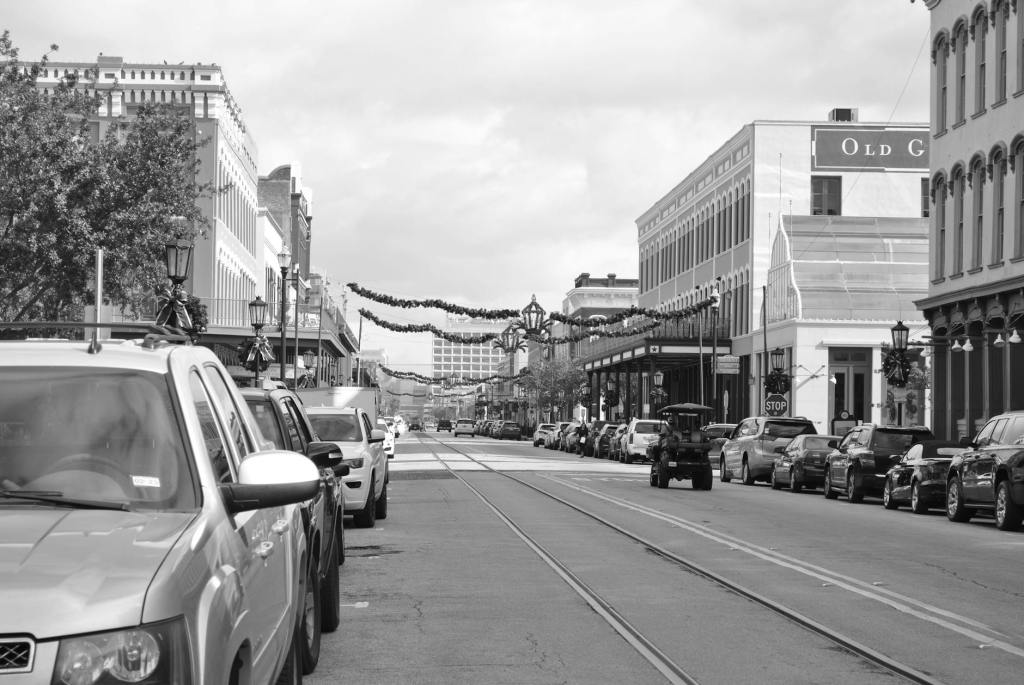
On Wednesday evening, my family and I were flying back from Washington, D.C. for our spring break trip. Yet another city. And as we banked over the Texas coast we could see Galveston – all lit up. From the plane window I could make out the ANICO building, and from there our house and this church. I could see UTMB and the port. I could see the ships lined up in the Gulf. I could see houses stretching out to the west end. I could see Tiki Island, and Texas City. I could see it all.
I’m not saying I was like Jesus looking over Jerusalem, but the vantage point was eerily similar. This is our community. And, I ask you to see that with me. To see all the people, with all their hopes and dreams and wealth and poverty and worries and aspiration. And from there you can see how Trinity Church has our work cut out for us. To gather all those people under our wings, into our house, like a mother hen gathers her brood. To encourage, to support, to hold to a higher standard, to care for, to nurture. That, I believe, is what the Lord God has always been calling us to do. Not to run away because the city is scary, not to find ways to escape, but to engage, because the city is where God’s people are.
So tomorrow as you go back to work, as you go back to your daily lives, as you come back from spring break – do so with that vision in your mind. That your call, our call, is not just to help this Church, but for the people of the Church to help our community. See that with me, see that everything you do is focused on helping someone else. And as you say your prayers for this place, and as you give, and volunteer, and serve here, as you think about how you want to be involved in this place – remember that it is for a deeper purpose. To serve, to gather all God’s people as a mother hen gathers her brood.
See also
Meeks, Wayne A. The First Urban Christians: The Social World of the Apostle Paul. Second edition. New Haven Conn. London: Yale University Press, 2003.
Stark, Rodney. Cities of God: The Real Story of How Christianity Became an Urban Movement and Conquered Rome. HarperOne, 2007.



 The Rev. Jimmy Abbott
Leave a comment