Third Sunday of Easter
April 19, 2026
Luke 24:13-35
The audio of this sermon is available here. The full video of the worship service from Trinity Episcopal Church is available here.
Here it is – my list of the best places to eat in Galveston. Probably the most controversial sermon I’ll ever give. So, the best breakfast taco – La Mixteca on Mechanic Street. The best view – is the lounge at Shearn’s. The best gumbo is Sonny’s, but only on Fridays. And you know, the real dividing line is Galveston, is if you go to Salsa’s or The Original.
But you know, a meal is more than food. When I think back to the best meals I’ve ever had, well, that list is totally different. I remember the hot dogs my family got at the old Stewart Beach pavilion years ago, and how we spent that whole day at the beach. I remember the time that power went out at our house, and we ate cold pizza on the front porch and watched the world go by. A meal, is much more than food. It’s the memories, and the people you’re with.
As it was for those two disciples, Cleopas and his companion. It’s Easter afternoon, they’ve just lived through the trauma of the crucifixion, some of the disciples say they’ve seen Jesus risen from the dead, but they’ve decided to skip town, to get out of Jerusalem, away from all those bad memories. Who knows what is going on in their heads and in the hearts – disillusionment, confusion, angst, hope. Until Jesus comes up, walking alongside, though they do not recognize him.
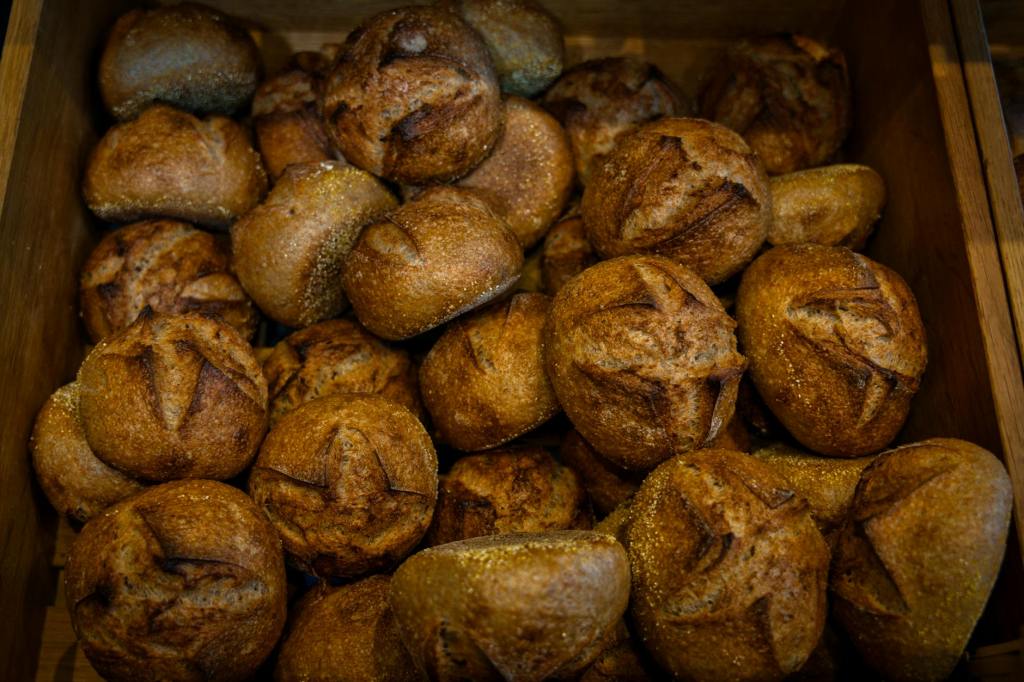
After walking, and talking, the disciples are ready to stop for a meal, and they invite Jesus to join them, though they still do not know it’s him. The food must not have been much – just some bread. But a meal is more than food. The risen Lord Jesus takes, blesses, breaks, and gives them that bread, and then they recognize him. Suddenly, it’s the best meal they’ve ever had. Why? Not because the food was delicious, not because it such a great venue, not because the view was spectacular – it was because their eyes were opened to see Jesus.
The best meals are rarely about the food. Why? Because it’s about being together.
And let’s admit it – this meal that we share, week by week, it’s not much of anything. A stale piece of flat bread. A spot of overly sweet wine. No one is coming to church because the food we serve is all that great. Like those disciples on the road to Emmaus, we are making our way through life, worn down by the weight of the world. Like those disciples, we’re hoping that Jesus will show up in our lives. We hear the stories about Moses and all the prophets. We come to be inspired to live lives of faith. We come to pray, to be prayed for. We come to show up, to be seen, to be with people we love and to learn how to love new people. It’s as the disciples say – we’re here so that our hearts would burn within us as we come near to Christ. We’re here so that the eyes of our faith would be opened just a bit more, each time, so that one day we, too, might look upon the Lord Jesus in his full risen glory. We are not here for the food, but for the meal. Broken bread, for burning hearts.
And best of all – it’s free. Absolutely, one hundred percent, free. I’ll tell you what – church is the best deal in town. There’s no place in the world you can get something like this – [a free concert every Sunday,] free air conditioning, free babysitting, and free coffee and donuts. What a bargain! And that’s what really makes this meal different, what makes it the best. No charge. Yes, there is an opportunity to give. As I give to this church. But that’s not a requirement. You don’t get a bill for going to church. There are no dues. No initiation fee. Everybody gets the same experience, whether you’ve given a number with zeroes and commas, or if you have never given a penny – if you can still find a penny.
This is all free. And yet, it costs us everything. Go back to that story, the road to Emmaus. Cleopas and the other disciple, they have this experience. The risen Lord Jesus is made known to them in the breaking of the bread. But notice what happens next. They don’t keep on walking, they don’t go on down that road, away from Jerusalem. No, they go back toJerusalem. They go back to the very place where Jesus died. They go back to the same city full of people that just demanded his crucifixion. Going back is a dangerous thing to do – it could cost them their lives. That meal was free, but it’s going to cost them everything.
Eating this bread and by taking this wine, sure, it’s free. But it comes with a commitment. A commitment to love God and to love neighbor. That’s not free. That costs us something. It costs us our ego, our pride, our self-control. By choosing to take this meal, we are also choosing against some other things. We are choosing against anger and hatred and division. And that is not cheap.
The same with baptism. As we’re about to celebrate. This sacrament, this gift of water and oil, it’s free. Anyone, absolutely anyone, can be baptized in the name of the Father, and of the Son, and of the Holy Spirit. From the smallest child to the convert on their death bed. The gift of baptism is free; but it costs us dearly. We make promises – promises to follow Jesus. Promises to seek Christ in all people. Promises to respect the dignity of every human being. The gift is free – new life given by the Holy Spirit. But it’s costly.
[As we will celebrate baptisms later today, we recognize this tension, this tension that those parents and kids are walking into. A free that is not cheap.]
[So, Katherine and Marissa, Courtney and Matt, as you present your kids for baptism, as you raise them into the full stature of Christ, you are walking right into the middle of tension. Today, we celebrate that free gift given to your kids. That they are welcomed into the household of God, and sanctified by the Holy Spirit. But we also pray for you, and for them, because we all recognize that actually doing this, living this life with Jesus, is not cheap.]
One last thing. Going back to the story. Notice that after Jesus breaks the bread, and the disciples recognize him, and they go running back to Jerusalem to tell the other disciples – they don’t take any of that bread with them. It’s not like they scoop up that loaf and say, “Look! We have Jesus!” No. The witness they share is from their hearts. In the same way, when we take communion, we should not focus so much on what happens to the bread and the wine. Because remember, a meal is about what we’re doing, not about the food. Take this bread, drink this wine, to remember, to celebrate, to set your hearts burning on fire for the Living God. It’s not so much that the bread and wine become special, it’s that you become special, holy, by having this meal. The same with that water for baptism. You’re not going to take a cup of it away from here, “Look! I’ve got the Holy Spirit!” It’s through the water that God is doing something for these children – sanctifying, and blessing, and cleansing, and restoring us by the Holy Spirit.
That’s the great theological irony of it all. You can pay an arm and a leg for what is supposedly the best meal in town. You can pay as much as you want for a spa treatment. But this meal, and this washing, it is free, though it will cost you everything – it costs a heart that burns for the Lord Jesus.




Leave a Reply